Advancing technology
the world can trust.
Independent research, evidence-based assurance, and self-hosted, air-gapped intelligence systems (your data never leaves your control) — so institutions can adopt innovation with confidence when the decisions matter most.
Ethos Manifesto
Why ETHOS
Exists.
Digital systems are reshaping democracy, public trust, culture, health, education and the environment faster than many institutions can govern or explain them.
ETHOS Institute helps partners translate complex ethical and technological challenges into research, policy, education, public engagement and storytelling that people can understand and use.
Why ETHOS Exists
Critical Digital Challenges
Algorithmic & Labour Bias
Hiring and resource allocation models reproducing market biases, screening out qualified individuals without transparency.
Civic & Democratic Exclusion
Demographic variance in verification models, automated exclusions, and barriers to equitable digital participation.
Disinformation & Manipulation
Polarising online architectures, algorithmic manipulation, and coordinated campaigns eroding public trust and media literacy.
Opaque Decisions
Complex technical systems shaping public opinion, resource pathways, and social outcomes with no explanation layer.
These complex problems require systematic, multi-disciplinary responses rather than generic policy statements. We translate ethical principles into practical public-interest systems.
Require evidence-led methodology? Read our Publications & Insights.
What Sets Us Apart
Academic Excellence·Practitioners' Expertise·Industry Compliance
Independent Governance.
Verified Legal Structure.
Independence isn't a slogan — it's our legal structure. As a non-profit Community Interest Company (CIC No. 17324848), incorporated in England & Wales, our assets are locked to our public-interest mission by law, and we take no funding from the technology vendors we assess.
Academic Provenance.
Peer-Reviewed Authority.
Our AI governance frameworks are grounded in peer-reviewed scientific monographs—specifically *AI Ethics: A Historical-Comparative Approach* ([Edward Elgar Publishing, forthcoming 2026](https://www.e-elgar.com/shop/gbp/artificial-intelligence-ethics-9781035340132.html))—moving beyond industry-sponsored whitepapers to deliver rigorous scholarly validation.
Semantic Grounding.
Dedicated UK Infrastructure.
Utilising a 600,000-page governance corpus (independently catalogued; methodology available on request) hosted entirely on dedicated physical hardware at the UWTSD Innovation Matrix in Wales. Enables robust, citation-capable mapping of AI risk landscapes without external data leakage.
Our work is grounded in published research, verified data, and operational evidence.
Grounded in Academic Excellence.
Our governance frameworks are developed in strategic partnership with the University of Wales Trinity Saint David (UWTSD) and Blekinge Institute of Technology (BTH) — ensuring academic rigour, empirical validation, and real-world applicability across two countries and seven collaboration areas.
(UWTSD est. 1822; BTH est. 1989)
(BTH partner — SERL)

University of Wales Trinity Saint David
Wales, UK · Est. 1822
The University of Wales Trinity Saint David (UWTSD) serves as the foundational institutional partner for the Ethos Institute, hosting the core physical infrastructure and computational hardware at the Innovation Matrix in Swansea. UWTSD combines a rich academic heritage with cutting-edge applied research, driving forward innovation in computing, artificial intelligence, and digital transformation. This partnership unites scholarly depth with applied assessment models to accelerate ethical technology adoption.
Building upon its outstanding REF 2021 impact, UWTSD excels in translating advanced theoretical frameworks into deployable real-world applications. By training domain-specific Large Language Models upon a scholar-curated compliance corpus, the University provides the empirical rigour and physical data sovereignty necessary to construct resilient, governance-focused architectures for mission-critical environments.
Data (2025)
(25,000+ Group)
Guardian 2026
Outstanding
UK-wide
Strategic Partners

Blekinge Institute of Technology
Karlskrona, Sweden · Est. 1989
Blekinge Institute of Technology contributes to Ethos through dual excellence: combining academic excellence with societal impact. BTH brings internationally recognised expertise in software-intensive systems, data- and technology-driven competitiveness, resilient and sustainable societies, and marine applications. This helps translate responsible technology governance into methods and practices that can be implemented, evaluated, and improved in real-world systems.
BTH has a strong research tradition in Strategic Sustainable Development, including work associated with Professor Karl-Henrik Robèrt, founder of The Natural Step and a leading figure in the development of the Framework for Strategic Sustainable Development. This gives Ethos access to systems-oriented expertise for assessing long-term sustainability risks, societal and environmental trade-offs, and pathways towards resilient and sustainable outcomes.
Data (2025)
(3,148 FTE)
Strategic Partners
AI Governance by the Numbers.
Empirical data demonstrates the critical gap between rapid technological adoption and systemic risk assurance.
The ETHOS Acronym.
Our institutional purpose is anchored in five foundational pillars of responsible technology stewardship.
Ethics
Anchoring digital systems in public-interest values, historical safety precedence, and cultural intelligence.
Trust
Establishing verifiable, traceable compliance paths and independent third-party audits to satisfy public trust.
Human-centred
Safeguarding human agency, autonomy, and labour rights against uncontrolled autonomous automation.
Openness
Pioneering total transparency via comprehensive model registries, open system cards, and traceable metrics.
Stewardship
Guaranteeing continuous verification, environmental sustainability, and safe digital-first institutional models.
Grounded in research.
Delivered in four stages.
Whether you're just starting your AI governance journey or enhancing an existing programme, we guide you through four essential stages — each anchored in over 30 years of peer-reviewed research and the ten pillars of the Bridge Framework.
Assess
Understand where you are. Our comprehensive maturity assessment evaluates your current governance practices across all 10 framework pillars, identifying strengths and gaps.
- Self-assessment tool
- Detailed maturity scoring
- Personalised recommendations
Align
Define what matters to your organisation. Map your values and regulatory requirements to the Bridge Framework's ten pillars, ensuring comprehensive coverage without redundant work.
- Values mapping workshops
- Regulatory alignment tool
- Stakeholder consensus building
Act
Implement with confidence. Access practical tools, templates, and playbooks that transform principles into operational governance systems your teams can actually use.
- Policy templates & checklists
- Role-based playbooks
- Implementation roadmaps
Accountable
Maintain and improve over time. Establish monitoring systems, reporting cadences, and continuous improvement processes that keep your governance effective as AI evolves.
- Monitoring frameworks
- Regular reassessments
- Impact reporting tools
First, the truth.
Six lenses, one clear picture.
You cannot govern what you have not measured. Ethos R² is our diagnostic engine — six evidence-based assessment modules that examine your AI estate from every critical angle and resolve into a single, defensible readiness picture. No guesswork. No vanity metrics. Just where you genuinely stand.
Six lenses, resolved into one defensible picture.
Policy Aligned
EU AI Act · Article 14
Bias Audit Passed
HR Recruitment Model v3
Continuous Monitoring
Ingesting live telemetry...
Then, the governance.
The command centre for AI compliance.
Measurement is meaningless without management. Ethos A² is your independent Assurance Studio. It ingests R² diagnostics and maps them directly to global frameworks (EU AI Act, NIST, ISO), providing a continuous, auditable command centre where policy translates into proof.
Then, the decision.
Two engines that turn insight into outcome.
A diagnosis is worthless if nothing changes. Ethos C² is our decision engine — two independent intelligence platforms that act on what R² reveals. The Digital Brainreasons over a 600,000-page governance corpus; the Quiet Room stress-tests the decisions that matter most. Together: advice, counsel, and strategic decisions.
The Digital Brain
Governance-grade reasoning over a self-hosted, citation-backed knowledge corpus — answers you can trace to source.
The Quiet Room
Adversarial decision intelligence for high-stakes calls under pressure — your toughest critic, before reality is.
Explore each platform in depth below.
Most governance is stitched together.
Ours is grown as one.
The difference is not more features — it is what happens between them. When diagnosis and action share one system, intelligence compounds with every cycle instead of leaking away at every handoff.
Point solutions, bolted together
- Disconnected audits that never speak to one another
- Blind spots in the gaps between separate tools
- Insight lost the moment it is handed off to action
- The same groundwork repeated, quarter after quarter
One continuous system
- Diagnosis flows straight into action — nothing lost between them
- Full-spectrum coverage, with no gaps to fall through
- Every action generates evidence that sharpens the next decision
- Intelligence compounds — each cycle makes the next one wiser
Ethos Diagnose
Evidence-based assessment modules determining diagnostic maturity across your organisation's AI portfolio.
Explore R² →Ethos Assure
Continuous agentic monitoring. The governance command centre tracking policy-to-action compliance in real time.
Explore A² →Ethos Intelligence
Multi-scenario stress testing. Wargame high-stakes strategic decisions before they ever hit production.
Explore C² →Ethos Field (F²)
The complete pipeline — R² · A² · C² — deployed fully air-gapped, on your disconnected, mission-critical premises.
Explore Air-Gapped Deployment →That is what holistic, academically grounded, enterprise-grade AI governance actually looks like — not a stack of tools, but one living system.
When Your Data Cannot
Leave the Building
For some institutions, the cloud is not an option — it is a liability. Air-gapped healthcare networks, defence and critical national infrastructure, government bodies under data-residency mandates: for these organisations, every cloud-based AI governance tool is disqualified before the conversation even begins.
ETHOS governance intelligence — Diagnose (R²), Govern (A²), and Decide (C²) — can be deployed fully air-gapped, on your own premises. No cloud. No connection. No data leaving your control. The same evidence-grounded, citation-traceable governance capability — running entirely within your walls.
This on-premises capability is currently in controlled deployment with our founding academic partners, and will be made available to a select number of qualifying institutional clients.
On-Premises Infrastructure
Zero external connectivity required
The Ethos Digital Brain
We do not guess when it comes to technology safety. The Ethos Digital Brain runs on private, open-source architecture trained specifically for compliance, assurance, and academic verification.

Ethos Digital Brain
🔒 Gated System Walkthrough — Click to request institutional access.
Dedicated UK Infrastructure
Hosted on dedicated physical hardware at the prestigious Innovation Matrix facility, University of Wales Trinity Saint David (UWTSD). Absolute data isolation with zero exposure to third-party public cloud providers.
600,000-Page Curated Corpus
A highly structured, noise-free compliance library selected exclusively by leading scholars and legal technology experts. Systematic closed-domain retrieval grounding with citation-level provenance.
Vector Compliance Mapping
Dynamic vector search maps operational assessment responses directly to formal international standards (EU AI Act, ISO/IEC 42001, NIST AI RMF) with traceable, auditable citations.
Academic sources only — noise removed.
One LLM per Ethos framework — powering the six R² assessment modules.
Open-source architecture meshed with Ethos proprietary technology — physically in our own data centre. Nothing ever leaves Wales.
A custom Obsidian-style graph maps the entire trained corpus — click any node to descend through folders to the exact source file. Navigation that makes finding information effortless.
The Quiet Room
Crisis Deliberation Research Division
The Quiet Room is a specialised research division designed to examine cognitive vulnerability and decision-making under acute stress.
The Quiet Room
🔒 Gated Crisis Management Deep-Dive — Click to request institutional access.
The cognitive vulnerability the Quiet Room is built to counter.
A multiplicity of expert personas debate every projected scenario.
Many layers of reasoning before any verdict.
Ethos' own architecture, trained >1 year — all data offline, no cloud, ever.
A custom Obsidian-style graph maps the entire 29M-page multi-domain corpus — click any node to descend through folders to the exact source file. Effortless navigation across every discipline.
🔒 Executive Briefing: Institutional access includes the complete, step-by-step Quiet Room Crisis Management Protocol & Deliberation Autopsy Manual.
From Finding to
Source.
Every finding generated by our models is traceably mapped back to its academic, empirical, and regulatory source. This is a real, anonymised sample demonstrating the exact resolution path.
We operate strictly within peer-reviewed, academic governance models. Watch how the core Bridge Framework translates complex societal risks into verifiable evidence.
Evidence-Based Algorithmic Audit Deep Dive
Resolution & Mapping Flow
Demographic Disparity
Language model deployment fails to enforce explicit demographic parity in customer verification scoring.
Closed-Corpus Ref
Regulatory Standard
EU AI Act, Title III, Chapter 2, Article 10 (Data and Data Governance safeguards).
Independent Attestation
Cryptographic signature and audit log proving all live findings are traceably mitigated to secure global institutional trust.
Built on Evidence, Not Hype
Our framework synthesizes over 30 years of peer-reviewed research from leading institutions.
Methodology aligned with the EU AI Act, NIST AI RMF, and ISO/IEC 42001.
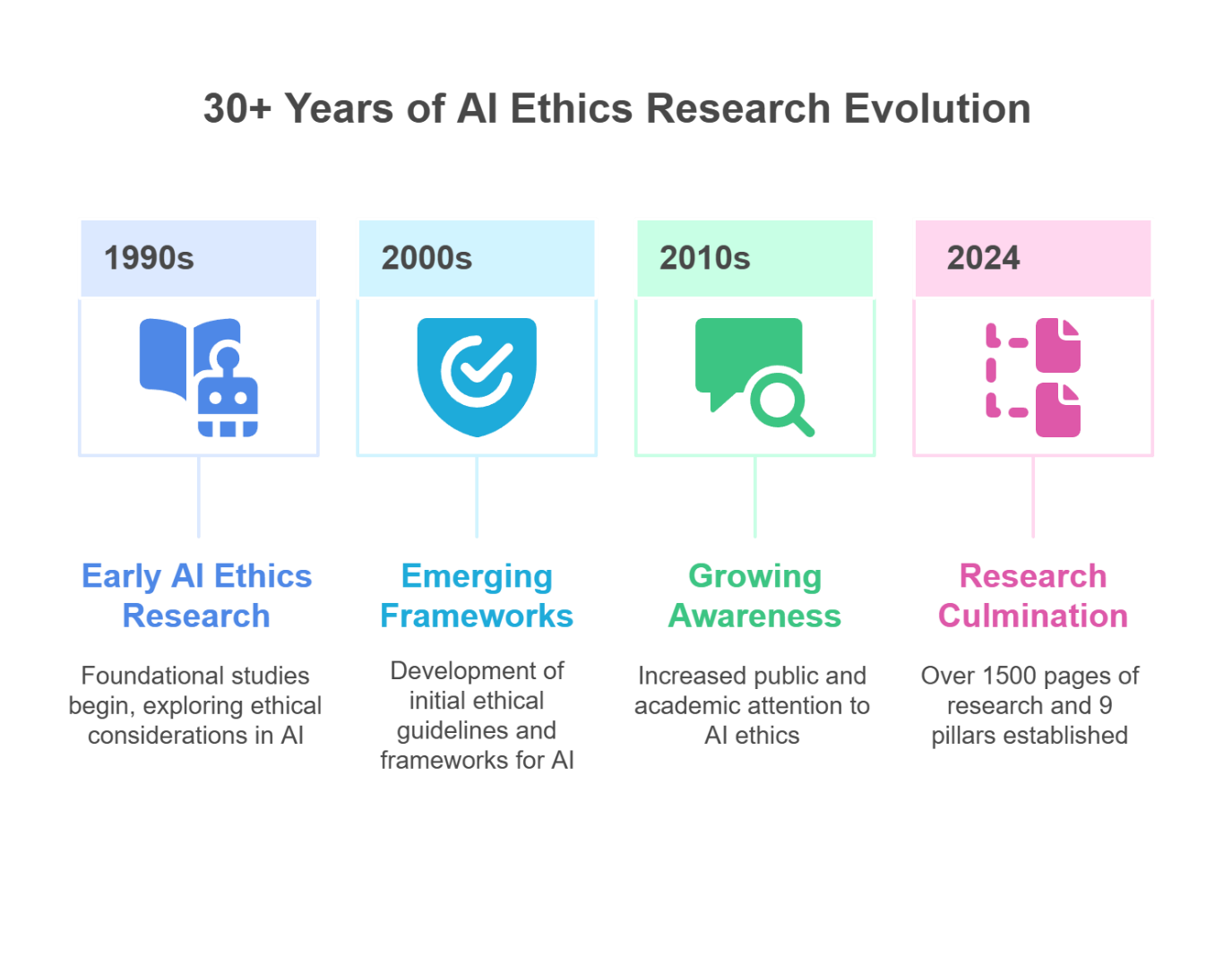
Six Core Pillars of Activity
We work across research, policy design, education, media literacy and public-interest storytelling to guide communities and institutions.
AI Ethics & Governance
We help organisations understand, govern and communicate the risks and responsibilities of artificial intelligence systems. From board-level charters to algorithmic safeguards, we translate values into practical policies.
Digital Democracy & Civic Trust
We research and design participatory digital architectures that strengthen civic trust, public inclusion, community voice and institutional accountability in the digital era.
Media Literacy & Disinformation
We develop open-access education, training curricula and analytical tools that help communities recognise online manipulation, deepfakes, informational drift and harmful practices.
Open Innovation & Public Value
We support collaborative innovation structures that connect public institutions, research universities, civil society and developers around shared health, educational and social challenges.
Storytelling for Change
We harness film, documentary narrative, visual design and storytelling to make complex technological, social and environmental problems visible, understandable and actionable for public audiences.
Sustainability & Biodiversity
We support public-interest communication and creative advocacy strategies around nature conservation, ecological stewardship and regenerative technological futures.
See our research in action exploring AI governance in the real world
Exploring AI governance challenges through evidence-based documentary research and thought-provoking expert insights
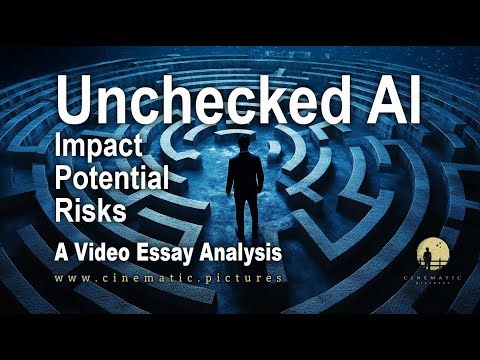
Unchecked AI
Exploring the risks and challenges of unregulated artificial intelligence development

AI in Social Media
Understanding how artificial intelligence shapes social media platforms and user experiences
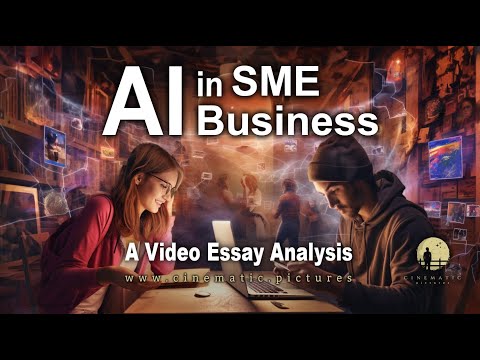
AI in Business
How organisations can leverage AI while maintaining ethical governance practices

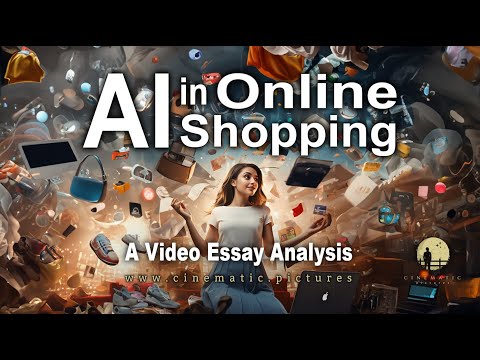
AI in Online Shopping
The impact of AI algorithms on e-commerce and consumer behaviour
AI & Innovation
Balancing technological innovation with responsible AI development and deployment
AI in Education
The role of artificial intelligence in transforming learning and educational systems
AI Bias
Identifying and mitigating algorithmic bias in artificial intelligence systems
Audience Pathways
We guide different organisations and partners through tailored collaboration routes to maximise public value.
For Public Institutions
Develop robust technological strategies, public engagement methods, and responsible governance frameworks.
For Universities & Researchers
Collaborate on academic research, joint publications, educational initiatives, labs and public knowledge exchange.
For Civil Society & NGOs
Build media literacy, community engagement, analytical capacity and technological advocacy pathways.
For Funders & Foundations
Support scalable, open-access public-interest programmes in technological ethics, democracy, and media literacy.
For Creative & Media Partners
Collaborate on documentary films, visual campaigns, creative labs and public communication initiatives.
Not Sure Where to Start?
Explore our core research framework first to see how we structure technology governance and ethics.
The Bridge Framework: From Principles to Practice
Ten integrated pillars that transform AI ethics principles into actionable governance systems.
Unlike fragmented approaches that offer abstract principles without implementation guidance, the Bridge Framework provides a comprehensive, evidence-based methodology backed by over 30 years of research. Each pillar includes assessment instruments, policy templates, training materials, and role-based playbooks—everything your organisation needs to implement effective AI governance.
Accountable Governance and Ethical Leadership
Establish clear accountability structures and ethical oversight for AI systems.
Purpose-Driven and Rights-Based Innovation
Ensure technological advancement is intentional, beneficial, and respects fundamental human rights.
Human Agency and Oversight
Augment human capabilities while preserving dignity and meaningful control.
Systemic Safety and Reliability
Engineer systems to be safe, secure, and reliable across diverse and adversarial conditions.
Data Integrity and Privacy
Ensure training data is accurate, representative, and handled with strict privacy protocols.
Algorithmic Transparency and Explainability
Disclose system capabilities and provide comprehensible rationale for automated decisions.
Continuous Assurance and Adaptation
Implement ongoing monitoring to ensure systems remain safe, effective, and ethically aligned.
Equitable Impact and Societal Well-being
Assess and govern the systemic effects of AI on social equity and collective psychological health.
Ecosystem Accountability and Market Fairness
Promote a healthy, fair, and diverse technological ecosystem free from anti-competitive practices.
Global and Cultural Context
Ensure governance architectures are culturally aware, adaptable, and globally inclusive.
Don't Wait for AI Risks to Cost You
$2.275M AI bias settlement (SafeRent, 2024). Up to 4% global revenue GDPR fines. 80% AI project failure rate.
Get ahead of risks with our rapid diagnostic across bias, transparency, security & operations.
Fast & Focused
12 targeted questions across 4 risk categories
Privacy-First
All calculations in your browser, no data transmission
Detailed Report
Risk matrix, priorities, and actionable recommendations
Built on Over 30 Years of Research
Evidence-based governance frameworks, not aspirational principles.
Rigorous Methodology
Systematic evaluation of 100+ existing AI ethics frameworks, standards, and guidelines to identify best practices and gaps.
Academic Foundation
Peer-reviewed research published in leading journals and institutions, ensuring credibility and rigor.
Practical Validation
Field-tested with organisations across sectors, refined through implementation experience and empirical outcomes.
Every recommendation in the Bridge Framework is backed by evidence. Our research foundation examines what works—and what doesn't—in real-world AI governance implementation. We don't offer untested theories; we provide proven methodologies refined through over 30 years of scholarly inquiry and practical application.
Independent. Transparent. Accountable.
Genuine independence is rare—and essential.
Why Independence Matters
In a landscape increasingly dominated by industry-backed initiatives, genuine independence is rare—and essential. The ETHOS Institute operates as an independent organisation governed transparently, free from commercial interests that might compromise our recommendations.
Our commitment:
Our Governance Principles
The same rigor we bring to AI governance applies to our own organisation:
Ethical Leadership
Board composition balancing diverse perspectives
Transparency
Financial disclosure and funding source clarity
Stakeholder Engagement
Public input mechanisms and consultation processes
Accountability
Regular reporting and independent audits
Need Personalised Support?
Our AI governance experts are available for one-on-one consultations to help you navigate complex implementation challenges, align stakeholders, and accelerate your governance journey.
Schedule Expert ConsultationComplimentary 30-minute discovery call available
Legal and Institutional Standing: ETHOS Institute is an independent research, education and public-interest innovation platform operating as a registered UK non-profit Community Interest Company (CIC No. 17324848), incorporated in England & Wales. To maintain absolute impartiality, we accept no direct funding or sponsorship from the technology vendors we analyse. Where educational or advocacy campaigns require high-end film, narrative or media production expertise, ETHOS Institute collaborates with independent creative production entities, including Gwyr Films and Cinematic Pictures.
You're one step away from:
Enter your email — we'll send an instant magic link. No password needed.
Check your inbox
Secure link sent to
Expires in 15 mins · Check spam if needed
Direct presenter and client playback access. Enter credentials below.
Access Unlocked
Authorised Presenter Mode Active.
Reloading physical interfaces...
For teams, universities, and public-sector bodies seeking institutional access.
Request received
Our team will be in touch within 1 business day.
Includes resources from
Your data is never shared. Privacy Policy